
Hair care
How to Use Black Castor Oil for Hair Growth
By Glam by Mona · 10 May 2026 · 9 min read

Everyone wants longer, thicker, healthier-looking hair, and black castor oil is one of the most popular natural hair oils for getting there. It is also one of the most misunderstood. Some people expect it to make hair grow overnight, while others dismiss it as a greasy oil. The truth sits somewhere in the middle.
The short answer: there is little solid scientific proof that castor oil makes hair grow faster from the scalp. What it does well is moisturize and coat your hair and scalp, which reduces dryness and breakage so you keep more of the length you grow. For many people that looks like faster growth. Massage it into your scalp two or three times a week, and give it three to six months.
What is black castor oil?
Castor oil is a thick, sticky oil pressed from the seeds of the castor plant. It is high in ricinoleic acid, a fatty acid that gives it its heavy, moisturizing feel. Black castor oil is usually made from roasted castor beans, which gives it its dark colour and slightly smoky smell. It has been used in hair and skin care in many parts of Africa, the Caribbean and Asia for generations.
Because it is so thick, castor oil sits on the hair and scalp instead of soaking in quickly. That is why it is a favourite for sealing in moisture on dry, curly and coily hair.
Does black castor oil really make hair grow?
Hair grows from the follicles under your scalp at about half an inch (1 to 1.5 cm) a month. How fast yours grows is mostly decided by genetics, hormones, age, health and nutrition. No oil changes that dramatically, and good studies showing that castor oil speeds up hair growth are limited.
What black castor oil can do is look after the hair and scalp you already have:
- Moisturize dry hair and scalp. Dry, brittle hair breaks easily, and breakage is the main reason hair seems to stop growing.
- Coat and protect each strand. This reduces friction and snapping, so you retain length.
- Make scalp massage easier. Some small studies suggest regular scalp massage may help hair look thicker, though more research is needed. Massaging with oil is simply more comfortable than massaging dry skin.
- Keep the scalp comfortable. A moisturized scalp is less likely to feel tight, dry and itchy.
What it cannot do is treat hair loss caused by genetics, hormones, illness or nutritional deficiencies. We cover those below.
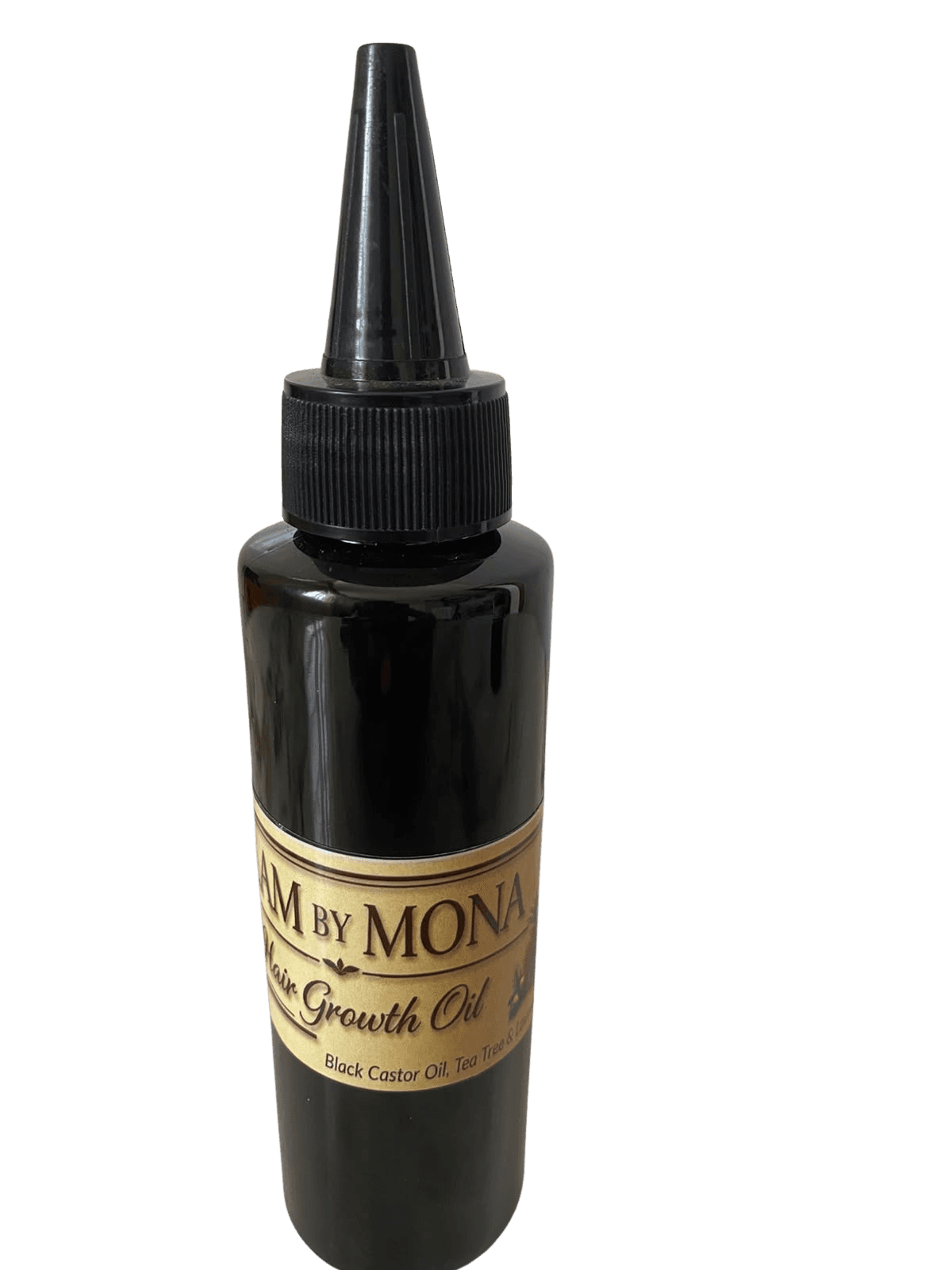
What is in our Hair Growth Oil?
| Ingredient | Why it is used |
|---|---|
| Black castor oil | A thick, moisturizing oil that coats and protects hair and helps seal in moisture |
| Tea tree oil | Widely used in scalp care and often added to products for flaky, itchy scalps |
| Lavender | Traditionally used for its soothing qualities and pleasant scent |
Together they make an oil designed to support a healthy scalp, keep hair moisturized and help reduce breakage. You can order our Hair Growth Oil online.
How to use black castor oil for hair growth
- Start with clean hair. Dry or slightly damp hair is fine. Part it into four to six sections.
- Apply to the scalp. Use the pointed tip of the bottle to put a few drops along each parting, directly on the scalp. A little goes a long way, because this oil is thick.
- Massage. Use the pads of your fingertips, not your nails, and make small circles for three to five minutes. Use gentle pressure. Scratching or pressing hard irritates the scalp.
- Treat the ends. Smooth a little over the ends of your hair. They are the oldest, driest part and the part that breaks most.
- Leave it in. Leave it for at least 30 minutes. If you want to leave it overnight, cover your hair with a satin bonnet or scarf and protect your pillow.
- Wash it out. Shampoo with a mild shampoo and follow with conditioner. Castor oil is thick, so you may need to shampoo twice.
How often and for how long?
Use it two or three times a week. If your hair is fine or your scalp gets oily quickly, once a week is enough. Take a photo of your hairline and parting today so you can compare, because hair changes slowly. Give any routine three to six months before deciding whether it works for you.
Using it with braids, twists, weaves and locs
Protective styles can help you keep length, but only when they are not too tight. Apply a few drops to the scalp between the braids or twists once a week or every two weeks, and massage lightly so oil does not build up under the style. Avoid soaking extensions or locs in oil, because heavy oil can leave residue that is hard to wash out.
Habits that matter as much as the oil
- Handle your hair gently. Detangle with a wide-tooth comb on moisturized hair, starting from the ends and working up.
- Avoid tight styles. Constant pulling on the hairline can cause permanent hair loss, called traction alopecia.
- Limit heat and harsh chemicals. Relaxers, bleach and frequent hot tools weaken hair.
- Trim split ends regularly. Splits travel up the strand and cause more breakage.
- Eat enough protein and iron. Hair is made of protein, and low iron is a common cause of shedding. A varied diet helps.
- Sleep and manage stress. Heavy stress can cause temporary hair shedding a few months later.
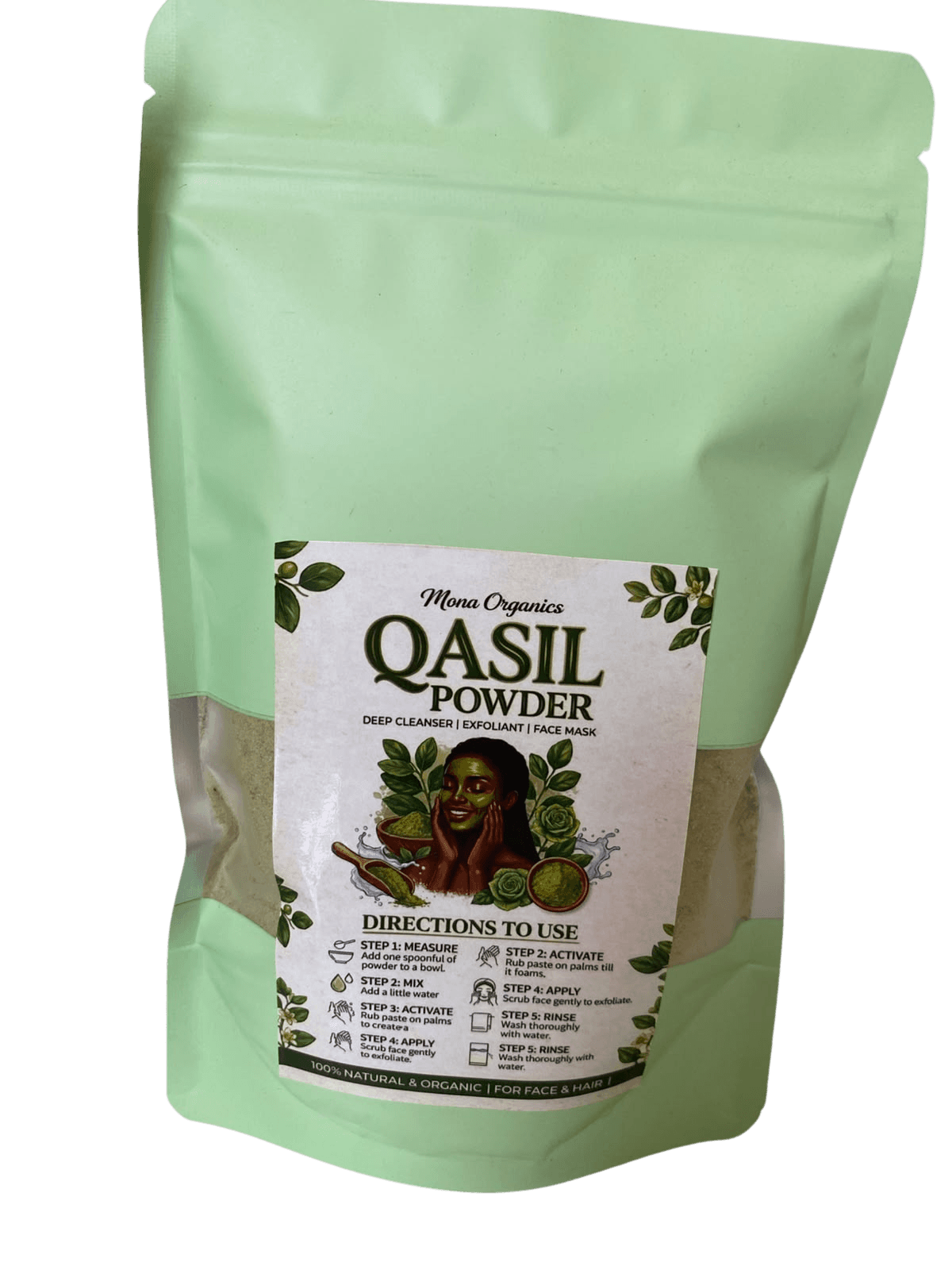
- Keep your scalp clean. Product and oil build-up can leave the scalp itchy and flaky. Our Qasil Powder is made for hair as well as skin and can be used as a hair mask to help prevent breakage and thinning. Our guide to using Qasil powder explains how to mix it.
Mistakes to avoid
- Using too much. Too much oil leaves a greasy scalp, build-up and sticky hair.
- Not washing it out. Old oil and dirt trap flakes and can make an itchy scalp worse.
- Massaging hard or with your nails. This damages the scalp and can cause breakage and irritation.
- Applying it to a sore or broken scalp. Leave inflamed, cut or infected skin alone until it heals.
- Expecting overnight results. Hair growth is slow, and swapping products every week makes it impossible to know what works.
- Ignoring the real cause. If tight hairstyles, harsh chemicals, a poor diet or a medical problem is behind your hair loss, no oil can fix it on its own.
Why hair thins or falls out
Losing 50 to 100 hairs a day is normal. Hair loss beyond that, or thinning you can see, usually has a cause:
- Genetics. Pattern hair loss runs in families and affects both women and men.
- Hormonal changes. Pregnancy and the months after birth, menopause, thyroid problems and PCOS can all change how much hair you shed.
- Stress, illness and crash diets.
- Low iron or other nutritional deficiencies.
- Tight hairstyles, relaxers, bleach and heat.
- Some medicines.
- Scalp conditions, such as dandruff, dermatitis and fungal infections.
A good oil cannot fix these. It can support your scalp, moisturize your hair and cut down on breakage.
Patch test and safety
Before you use any new product, put a small amount on the inside of your forearm or behind your ear and wait 24 hours. Do not use it if you notice redness, itching, burning or swelling. Tea tree and lavender oils can irritate sensitive skin, so stop using the oil if your scalp reacts.
Keep the oil out of your eyes (rinse with plenty of water if it gets in), and do not swallow it. If you are pregnant or breastfeeding, or you want to use it on a baby or child, ask your doctor first.
When to see a doctor
A hair oil is not a treatment for a medical problem. See a doctor or dermatologist if:
- hair is coming out suddenly, in clumps or in patches
- your hairline is receding or your parting is widening and it keeps getting worse
- your scalp is painful, very itchy, scaly, red or has sores, bald patches or oozing, which can be signs of an infection
- the hair loss comes with tiredness, weight changes, irregular periods or other symptoms
- you are worried, or nothing has improved after three to six months of steady care
A simple blood test can check for common causes like low iron or a thyroid problem.
Frequently asked questions
Does black castor oil really make hair grow faster?
There is not much solid evidence that it speeds up growth from the scalp. It moisturizes and protects your hair, which reduces breakage, so you keep more length and your hair looks fuller. That is why many people feel their hair is growing faster.
How long does it take to see results?
Give it three to six months of regular use. Hair grows slowly, and results vary from person to person.
How often should I use it?
Two or three times a week is enough for most people. Use it once a week if your hair is fine or your scalp gets oily.
Can I leave it in overnight?
Yes, if your scalp tolerates it. Cover your hair with a satin bonnet or scarf, and wash it out the next morning. If your scalp breaks out or feels itchy, leave it on for only a few hours instead.
Is it suitable for all hair types?
It can be used on all hair types, but thick, coily and dry hair usually benefits most. If your hair is fine or oily, use fewer drops and apply it only to the scalp and ends.
Can I use it on my eyebrows, eyelashes or beard?
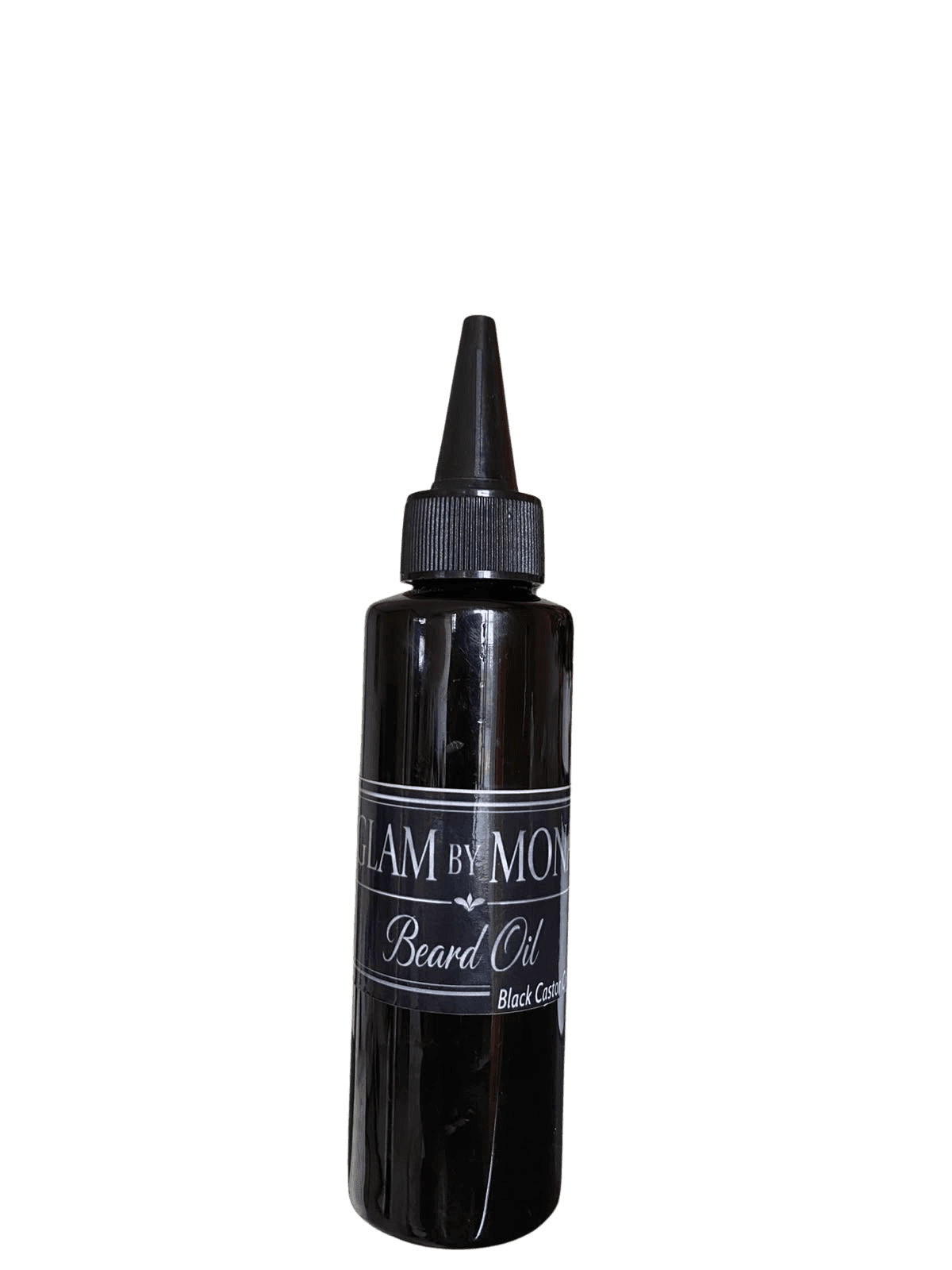
Our Hair Growth Oil is made for your scalp and hair. Keep it away from your eyes, and do not use it on eyebrows or lashes. For your beard, try our Beard Oil.
Where can I buy black castor oil hair oil in Kenya?
You can order our Hair Growth Oil online. We deliver across Kenya, with the delivery cost confirmed after you order, and you can pay with M-Pesa Express, card or Paybill.
The takeaway
Black castor oil will not change your genes or cure hair loss, but it is a good way to moisturize your scalp, protect your hair and reduce breakage so you keep the length you grow. Massage a little into your scalp two or three times a week, wash it out well, handle your hair gently, eat well and be patient for three to six months. See a doctor if your hair loss is sudden, patchy or getting worse.
Made in small batches
Ready to give your skin the care it deserves?
Shop natural body, skin and hair care from Glam by Mona. Pay with M-Pesa Express, card or Paybill — delivered across Kenya.
Not sure what suits you? Ask us on WhatsApp
Shop the products in this article
Keep reading

Dry skin
Shea Butter vs Mango Butter for Dry Skin
hea butter and mango butter are both excellent for dry skin, but they feel and work differently. Find out which suits your face, body and skin type, how to use each, and when to use both.

Acne, Skin Care
How to Use Qasil Powder for Acne-Prone Skin
Qasil powder is a traditional natural cleanser and gentle exfoliant. Learn how to mix it, how often acne-prone skin can use it, the simple routine around it, and the mistakes that cause irritation.

Hyperpigmentation
How to Get Rid of Dark Knuckles Naturally
Dark knuckles are common and treatable. Find out what causes them, how to lighten them with gentle daily habits (moisturizer, gentle exfoliation and sunscreen), what to avoid, and when to see a doctor.